

Start with a scheduling call
The Rehabilitation Center for Children and Adults lists aquatic therapy among its outpatient services in Palm Beach. If you are planning a first visit, call with four questions in mind. Ask about referrals, where to arrive, changing arrangements, and any accessibility needs you want to discuss. Knowing what to expect helps you plan your transport and choose what to bring. An aquatic visit may involve time to change and get to the pool area, so ask the clinic how early to arrive and where to check in.
Why the referral question comes first
At RCCA, the RCCA appointment page states plainly that treatment requires a physician's referral. That's worth asking about on your very first call to any outpatient clinic, because it changes what you need to bring and who you may need to contact before scheduling.
Questions worth asking at this stage:
– Do you require a physician's referral before you can schedule or evaluate me?
– If I don't have one yet, can you tell me what kind of referral is acceptable, or do I need to get that from my own doctor?
– Is there a form the referring physician needs to complete, or will a general referral note work?
If a clinic's process differs from what you expect, it's better to find out before you've taken time off work or arranged a ride to get there.
Arrival: what to ask so you're not standing in the lobby confused
Arrival logistics for an aquatic session can look different from a standard therapy visit — there may be a separate entrance, a different check-in window, or specific timing tied to pool access. Since these details vary by facility and aren't something to assume, ask directly:
– What time should I arrive relative to my scheduled appointment?
– Is there a specific entrance or check-in area for aquatic therapy, or is it the same as other services?
– Is parking near that entrance, and is there anything I should know about drop-off if someone is driving me?
If you're being dropped off rather than parking yourself, ask whether there's a place for a driver to wait, and roughly how long the visit is expected to run — not for clinical reasons, but so the person picking you up isn't guessing.
Changing arrangements: a reasonable thing to ask about directly
Changing arrangements are one of those details that differ clinic to clinic and are rarely spelled out on a website. Asking isn't an imposition — it's exactly the kind of question a scheduling coordinator expects.
– Is there a private changing area, and do I need to bring my own towel or will one be provided?
– Is there somewhere secure to leave personal belongings during the session?
– Do you have any guidance on appropriate swimwear, or is that something my referring clinician will cover separately?
If the answer to any of these isn't available over the phone, ask who can confirm it before your appointment date — a receptionist may need to check with the therapy team.
Accessibility: ask instead of assuming
If you or the person you're bringing in uses a wheelchair, walker, or needs help transferring, accessibility is worth confirming directly rather than guessing from a website photo or floor plan.
– Is the facility accessible for a wheelchair or walker from the parking area through to the therapy space?
– Is there a lift or ramp for pool access, and is staff assistance available for transfers if needed?
– Are accessible changing and restroom facilities available on-site?
These are reasonable questions for any outpatient facility, and a clinic that handles aquatic therapy regularly should be able to answer them on the same call.
A worked example: arranging transport and accessibility together
Say a caller is scheduling a first visit for a parent who uses a walker and will be dropped off by a family member who can't stay for the full appointment. A useful call might go: confirm whether a referral is already on file or still needed, ask what time to arrive and whether there's a specific entrance for aquatic therapy, ask whether the entrance and changing area are walker-accessible, and ask whether staff can assist with the walker to poolside if the driver isn't staying. Asking all of this in one call, before the appointment date, means the family isn't working out logistics in the parking lot with someone waiting in the car.
A copyable checklist for your scheduling call
Referral: Do you require a physician's referral, and what form does it need to take?
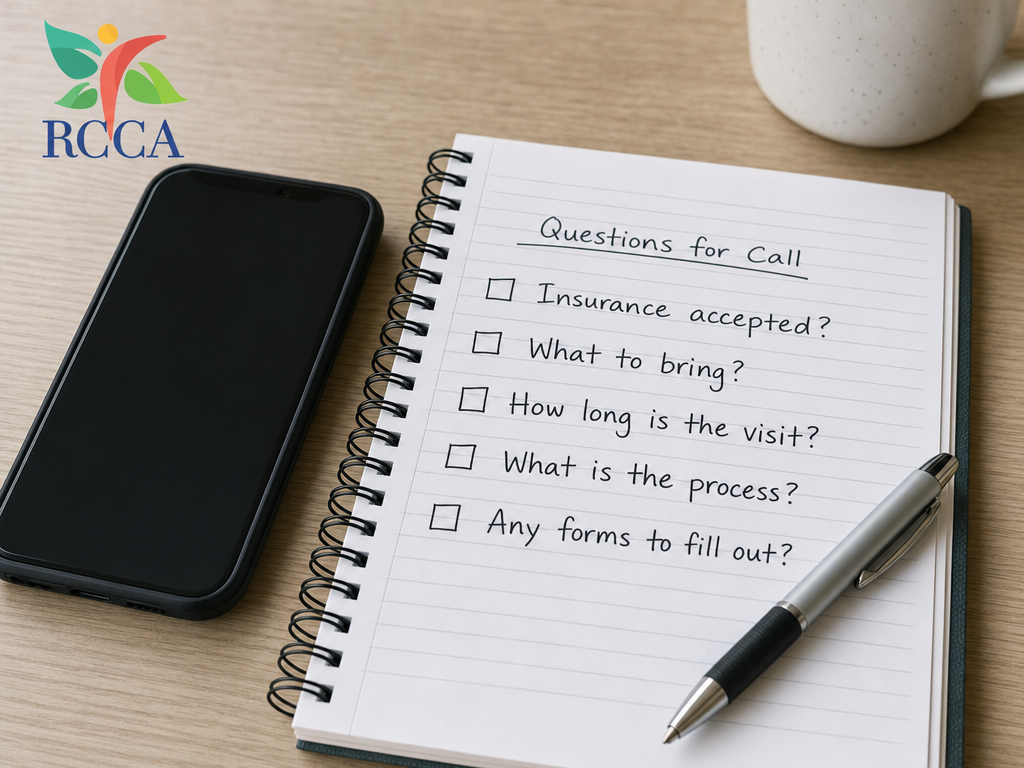
Arrival: What time should I arrive, and is there a specific entrance or check-in for aquatic therapy?
Changing: Is there a private changing area, and what should I bring?
Accessibility: Is the route from parking to the pool area accessible, and is staff assistance available for transfers?
These four categories cover the logistics that are reasonable to confirm before a first visit. For anything about whether aquatic therapy is appropriate for a specific condition, that question belongs with the referring physician or the clinical team, not the scheduling call.
Where to go from here
If you're still deciding between types of outpatient care, it can help to read through what matters when choosing an outpatient physical therapy clinic, since many of the same logistics questions apply beyond aquatic therapy specifically. If you're preparing for occupational therapy rather than aquatic sessions, a similar set of questions to ask about occupational therapy covers that first-call groundwork.
RCCA's appointment page outlines that a physician's referral is required and provides a request form and phone number for scheduling. That's the right starting point for confirming referral status and arranging your first visit directly.
Questions and answers
Do I need a referral before calling to schedule aquatic therapy?
Ask on your first call. RCCA's published appointment information states that treatment requires a physician's referral, so it's worth confirming what form that referral needs to take before you schedule.
Should I ask about clinical suitability for aquatic therapy on the scheduling call?
That question is better directed to your referring physician or the clinical team during evaluation. The scheduling call is the place for logistics — referral status, arrival, changing arrangements and accessibility — not treatment decisions.
Ready to ask these questions directly? Call RCCA or use the appointment request form on their appointment page to confirm referral status and arrange your first aquatic therapy visit.