
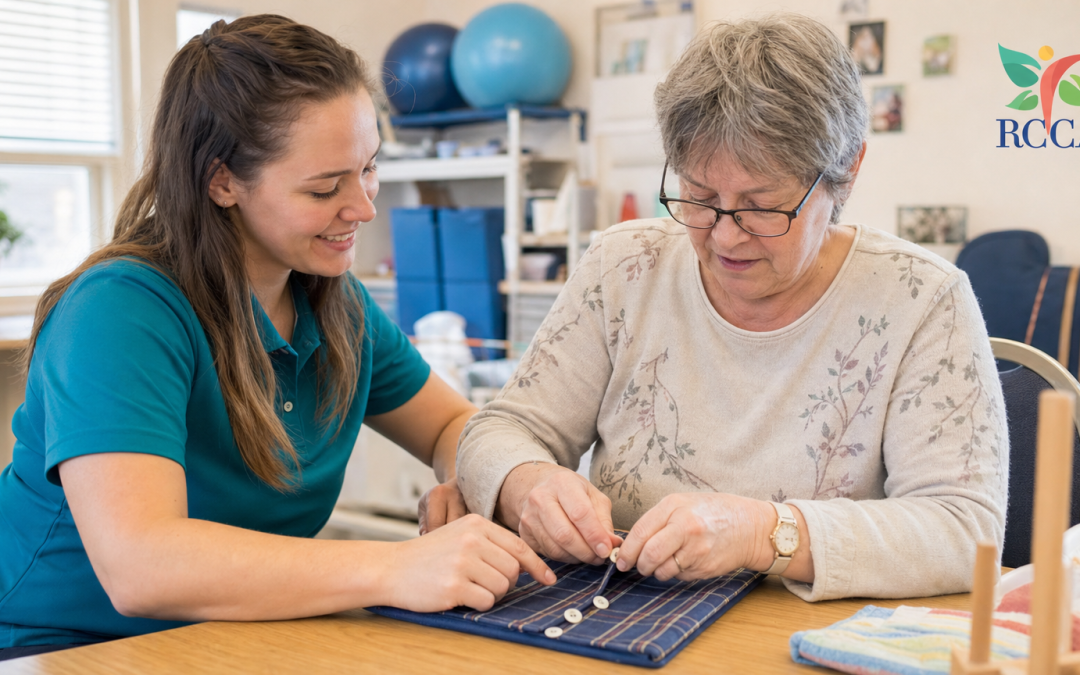
Questions to Ask Before You Choose Occupational Therapy
Occupational therapy helps you get back to the things you actually need to do — getting dressed, cooking, returning to work, using your hand again after an injury or surgery. Before you commit to a provider, a handful of questions separate therapy that gets you back to your life from therapy that just fills a time slot.
Ask about the therapist's experience with your specific condition, what the first evaluation involves, whether there's a specialized program for your injury, how they'll keep your doctor informed, and whether you actually need occupational therapy or physical therapy — or both. RCCA offers occupational therapy, and the questions below are worth asking any clinic you're weighing, including this one.
Does the Therapist Have Experience With Your Specific Need?
Occupational therapy covers a wide range of ground — sensory and developmental work with children, recovery after a stroke, and rehabilitation after a hand, wrist, or arm injury are all 'occupational therapy,' but they call for very different skills. Ask directly whether the clinic treats your specific condition regularly, not just occasionally.
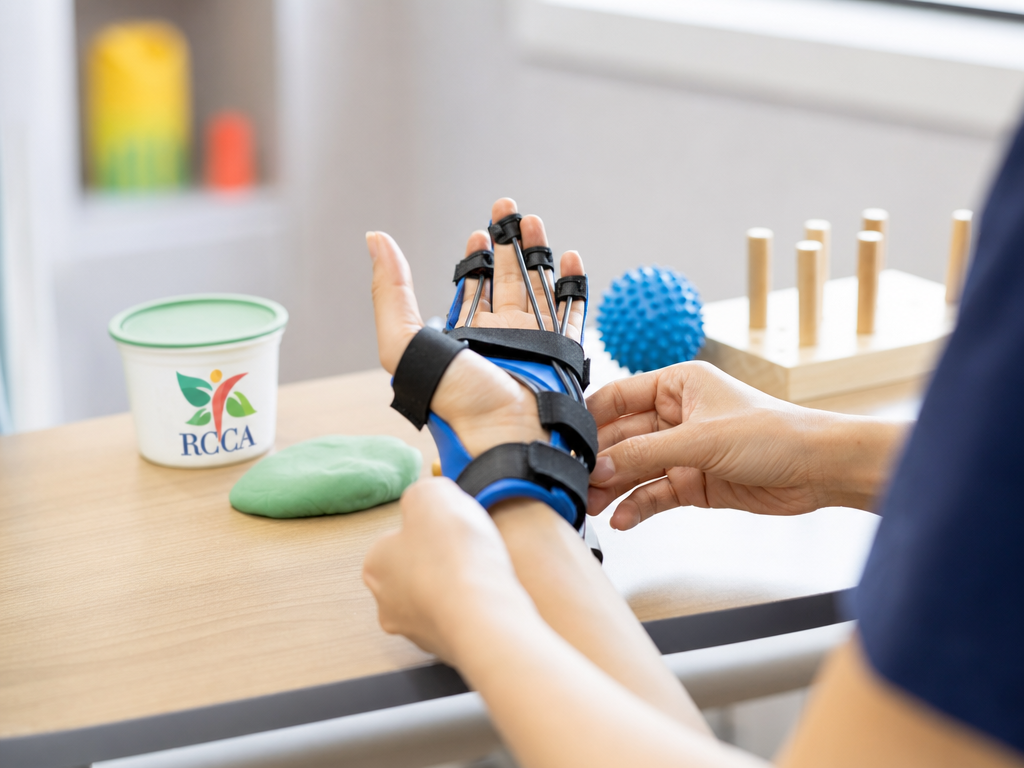
If your injury involves your hand, wrist, or arm, ask whether a dedicated program exists rather than general OT applied to a hand problem. RCCA runs hand therapy programs built specifically around that kind of recovery, which matters because hand function is detailed work — grip, dexterity, fine motor control — and it benefits from a therapist who works in that area often.
What Happens at the First Evaluation?
A good evaluation isn't just paperwork. It should cover your medical history, a functional assessment of the specific tasks you're struggling with, and a conversation about what you actually want to be able to do again — not just a general sense of 'improvement.'
Ask the clinic to walk you through what a first visit looks like before you book one. If they can describe it clearly and it matches what you need, that's a good sign. If the answer is vague, that's worth noting too.
What Does a Plan of Care Actually Involve?
Once the evaluation is done, ask what the actual plan looks like day to day. A plan built around your goals should name specific functional targets — being able to grip a coffee cup again, type for a full workday, lift a child safely — rather than general language like 'improve strength' or 'increase range of motion.' Vague goals are hard to measure, and hard to know when you've reached.
Ask how often progress gets checked against those goals, and what happens if it stalls. A therapist adjusting the plan when something isn't working is different from one running the same routine regardless of how you're responding. Ask, too, whether you'll be given exercises to do at home between visits — most OT plans include some home component, and how seriously that's built into the plan says something about how the clinic approaches recovery outside the appointment itself.
How Will the Therapist Communicate With Your Doctor or Surgeon?
If you've been referred by a physician or you're recovering after surgery, your occupational therapist and your doctor should be talking to each other, not just to you. Ask how progress is reported back — after every visit, at set intervals, or only if something changes. Coordination between your therapist and your physician matters most in the weeks right after surgery, when adjustments to your plan need to happen quickly.
Occupational Therapy or Physical Therapy — Which Do You Need?
These two get confused often, and the difference matters for which questions you're even asking. Physical therapy generally focuses on movement itself — strength, mobility, pain, how your body moves. Occupational therapy focuses on function — your ability to independently do the specific tasks of your day, whether that's buttoning a shirt, typing, or lifting a toddler.
Some injuries call for one, some call for both. If you're not sure which fits your situation, ask the clinic to help you figure it out rather than guessing on your own. RCCA also provides physical therapy, so the same conversation can cover either path.
A Quick Example: Matching the Program to the Injury
Here's a simple way to think through the decision. Say someone breaks a wrist, finishes the cast stage, and is left with stiffness and weak grip strength in the hand and fingers. That's a case where a program built specifically around the hand — fine motor control, grip, dexterity — generally fits better than general occupational therapy applied broadly to the same injury. If the same person's shoulder has also stiffened up from weeks of holding the arm still, that's a separate problem better addressed through work on that joint's range of motion, often running alongside hand recovery rather than replacing it.
This is a general illustration of how the pieces usually fit together, not a specific case from this clinic's files. But it reflects a real pattern: an injury can touch more than one kind of therapy at once, and a clinic that offers occupational therapy, hand therapy programs, and physical therapy under one roof can coordinate between them instead of sending you somewhere else for the piece that doesn't fit.
What to Ask About Cost and Insurance
Before you book a first appointment, ask whether the clinic verifies insurance benefits for you or leaves that step to you. Ask whether a physician referral is required for occupational therapy under your plan, since referral rules vary by insurer and, in some cases, by state — it's not something a clinic can answer in general terms without knowing your specific coverage. Ask, too, what a visit typically costs if you haven't met your deductible yet, so a bill doesn't arrive as a surprise partway through treatment.
These aren't the most comfortable questions to ask up front, but a clinic willing to walk through them clearly before you start is generally easier to work with than one that leaves you to figure it out after the first invoice.
When to Reach Out
If a condition is making it harder to do the daily tasks that matter to you — dressing, cooking, working, or recovering hand function after an injury — and you're ready to ask a clinic these questions in person, that's the right time to get in touch. Write your questions down beforehand if that helps, and expect clear, specific answers before you commit to a plan.
Questions and answers
What's the difference between occupational therapy and physical therapy?
Physical therapy generally targets movement — strength, mobility, and pain in the body as a whole. Occupational therapy targets function — your ability to independently carry out the specific daily tasks you need to do, from self-care to work tasks. Many people benefit from one or the other, and some need both; RCCA provides both occupational therapy and physical therapy, so the right fit can be sorted out as part of the conversation.
Is hand therapy the same as occupational therapy?
Hand therapy is a specialized form of occupational therapy (and sometimes physical therapy) focused specifically on the hand, wrist, and arm — areas where fine motor control, grip, and dexterity are the goal. If your injury is in that area, it's worth asking whether a clinic has a dedicated hand therapy program rather than general OT. RCCA's hand therapy programs are built around that specific kind of recovery.
Do I need a physician referral to start occupational therapy?
Referral requirements depend on your insurance plan and sometimes on state rules, so this is a question worth asking any clinic directly rather than assuming one way or the other. Ask the clinic you're considering, including RCCA, whether a referral is required under your specific coverage before you schedule a first visit.
If you're weighing occupational therapy options, contact RCCA to ask these questions directly and find out whether occupational therapy, hand therapy, or physical therapy fits what you're dealing with.