

What Outpatient Physical Therapy Actually Means
Outpatient physical therapy means you visit a clinic for treatment and go home the same day. There's no hospital stay involved. It's the setting most people use after a surgery, an injury, or for ongoing pain that hasn't resolved on its own.
Not every outpatient practice treats every condition the same way, though. Some focus narrowly on sports injuries, others handle a wider range of conditions, and some offer related services like occupational therapy alongside physical therapy. The questions you ask before your first appointment can save you weeks of mismatched care, especially if your injury needs a more specific kind of attention than a general program provides.
RCCA provides outpatient physical therapy and occupational therapy, including a dedicated hand therapy program for hand and upper-extremity injuries. Knowing that range of options ahead of time makes it easier to ask the right questions when you call.
Ask What Happens at the First Visit
A first physical therapy visit usually includes a conversation about your injury or pain, a review of your medical history, and a hands-on assessment of how you move. The therapist should watch you perform relevant movements — walking, reaching, squatting, gripping, whatever applies to your injury — and explain what they're seeing before setting any goals.
It's reasonable to ask a clinic ahead of time how long the first visit runs, whether you'll get a written plan to take home, and whether the person who evaluates you is the same person who will treat you going forward. The answers tell you a lot about how organized the practice is. A rushed evaluation that skips straight to treatment, without explaining the reasoning behind it, is worth questioning.
Ask Whether You Need Physical Therapy or Occupational Therapy
These two get confused often. Physical therapy generally focuses on movement, strength, and mobility after an injury, surgery, or ongoing pain — think walking, lifting, bending, and reducing pain during daily activity. Occupational therapy focuses more on your ability to perform specific tasks, whether that's getting dressed, returning to work duties, or regaining fine motor control in your hands.
If you're not sure which one applies to your situation, ask the clinic directly. Many people start with one and get pointed toward the other once the evaluation is done. RCCA offers both physical therapy and occupational therapy, so if your needs shift partway through treatment, that's a conversation worth having early rather than after you've already started.
Ask About Specialized Programs for Your Specific Injury
Some injuries benefit from a more focused program rather than general physical therapy. Hand, wrist, and elbow injuries are a good example — they often involve splinting, fine motor retraining, and a level of detail that a general outpatient program may not be built around. A focused program also tends to track smaller, more specific markers of progress — grip strength, finger range of motion — that a general outpatient visit might not measure in the same detail.
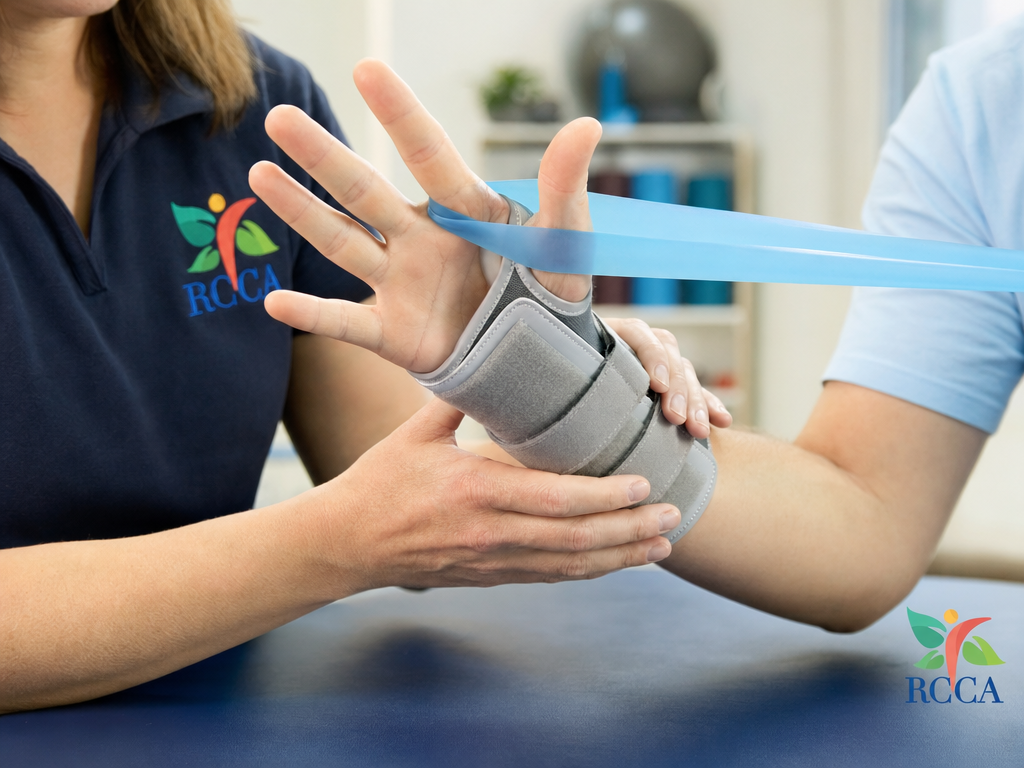
If that's your situation, ask whether the clinic has a dedicated program for it. RCCA runs a hand therapy program specifically for hand and upper-extremity injuries, which is worth asking about if a general PT evaluation doesn't feel like it's addressing the specifics of your injury.
Ask How They'll Track Your Progress
A good outpatient program should give you a way to measure whether treatment is actually working — not just a feeling of 'getting better,' but specific markers like range of motion, strength, grip force, or how far you can walk without pain. Ask how often you'll be reassessed and what happens if progress stalls. A plan that never changes, even when you're not improving, is worth questioning. Reassessment doesn't need to be complicated — it can be as simple as comparing today's numbers to the ones recorded at your first visit — but it should happen on a schedule you're told about, not left to chance.
Ask About Scheduling and Continuity of Care
Outpatient physical therapy usually isn't a one-and-done appointment. It's a series of visits over weeks, sometimes months. Visit frequency varies by condition and by how a person responds to treatment, so it's fair to ask how many visits per week are typical for something like yours, whether you'll see the same therapist each time, and what the process looks like if you need to reschedule. Continuity matters — a therapist who's followed your case from the start notices small changes a rotating schedule can miss, and doesn't need to re-explain your history at every visit.
Ask About Insurance and Referral Requirements
Whether you need a physician referral before starting outpatient physical therapy depends on your insurance plan and, in some cases, state law. A number of states allow direct access, meaning you can see a physical therapist without a referral, but your insurance may still require one for coverage purposes — the two aren't always the same thing.
Ask the clinic to confirm what your specific plan requires before your first visit. This is one area where it genuinely pays to ask directly rather than assume, since the answer varies from one insurance plan to the next, and starting treatment without confirming coverage first can turn into an unexpected bill later.
What to Bring to Your First Appointment
Bring your insurance card, a photo ID, a referral if your plan requires one, and a list of any medications you're currently taking. If you've had any imaging done — X-rays, an MRI — bringing a copy or knowing where it's on file can save the therapist from working without that information. Comfortable clothing that allows the therapist to see and move the affected area helps too — loose shorts for a knee or hip issue, for example, rather than tight jeans.
When to Reach Out to RCCA
If you're dealing with an injury, recovering from surgery, managing ongoing pain, or working through a hand or upper-extremity problem, it's worth asking RCCA these same questions directly. A short conversation before you book can tell you whether outpatient physical therapy, occupational therapy, or the hand therapy program is the right starting point for your situation.
Questions and answers
Do I need a referral to start outpatient physical therapy?
It depends on your insurance plan and sometimes on state law. Some states allow you to see a physical therapist without a referral, but your insurance coverage may still require one. Confirm this with the clinic before your first visit.
What's the real difference between physical therapy and occupational therapy?
Physical therapy generally focuses on movement, strength, and mobility, while occupational therapy focuses on your ability to carry out specific daily tasks, including fine motor skills. Many people need one or the other, and sometimes both at different points in recovery.
How do I know if I need a specialized hand therapy program instead of general physical therapy?
If your injury involves your hand, wrist, or elbow, a dedicated hand therapy program may address details that a general outpatient program isn't built around, such as splinting and fine motor retraining. Ask the clinic whether they offer one.
If you're weighing outpatient physical therapy, occupational therapy, or a hand therapy program, contact RCCA with these questions before you decide — a short conversation up front can point you to the right starting place.